
La Giornalista Alice Schalek nel suo Isonzofront, quando parla della "… località contesa di San Martino …" descrive la guerra sotterranea fatta dai due eserciti in questo modo: "Nell'intricata posizione di San Martino la guerra più attiva è quella delle mine sotterranee. E' chiaro che l'idea delle mine sia partita da qui, da questa confusione di trincee, da questa pendenza del plateau, dove i lavori in galleria non si possono udire così facilmente come sulle creste dei monti. (…)"
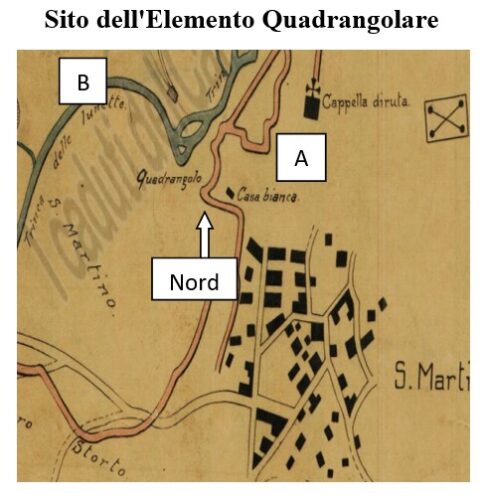
A - Trincea ungherese a difesa di S. Martino
B - Trincea italiana
In questa area italiani e austroungarici combatterono una sanguinosa guerra di posizione dall'estate del 1915 all'estate del 1916.
I genieri italiani scavarono tre gallerie per raggiungere le trincee nemiche poste a difesa di San Martino.
L'azione militare fallì a seguito di una potente contromina austroungarica seppellendo gli stessi genieri ancora al lavoro.
L'area delle due linee di combattimento è stata resa accessibile.
Il giardino attiguo, intitolato a Roberto Visintin, ricorda i tanti giovani soldati che hanno combattuto e perso la vita per la loro Patria.
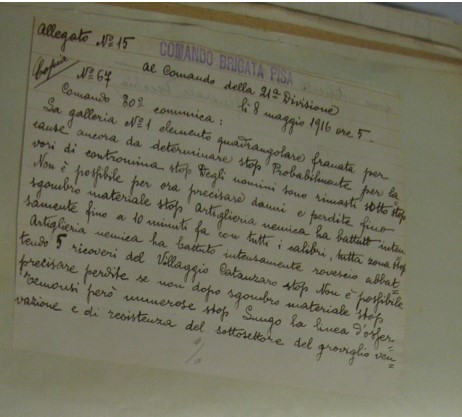
Resoconto del Comando italiano sui danni subiti dall'Elemento Quadrangolare.
A capo dell'operazione della mina italiana il Tenente Umberto Florio, per la contromina ungherese il Tenente Géza Heim.
Il tenente Florio morì poco tempo dopo a causa dell'azione austriaca dei gas del 29/30 giugno 1916, Il tenente Geza a fine guerra ritornò in Ungheria. Per l'azione della contro mina ricevette dall'Arciduca Giuseppe il cavalierato e il titolo di Barone di San Martino del Carso.
L'area dell'Elemento Quadrangolare con riportate le gallerie scavate dai genieri italiani e la galleria ungherese della contromina fatta esplodere alle ore 03.30 dell' 8 maggio 1916.
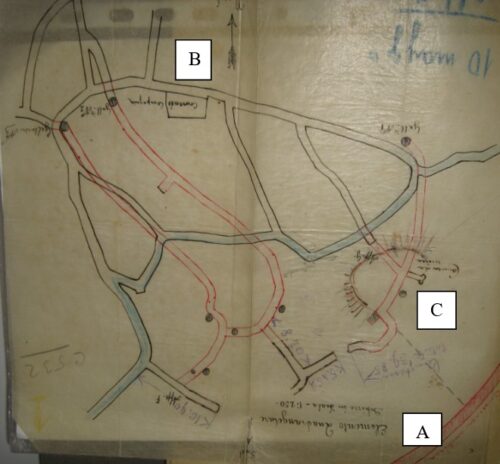
Mappa Quadrangolo o Elemento quadrangolare
A - Trincea AU - Posizione ungheresi
B - Trincee e Gallerie italiane
C - Cratere Mina italiana e Contromina ungherese
___________
The underground war in San Martino del Carso 1915 – 1916 – La grande mina –The big underground explosive charge
The Site of the Quadrangular element
The Italians and Austro-Hungarians fought a bloody war of position in this area from the summer of 1915 to the summer of 1916.
The Italian sappers dug three galleries in order to reach the enemy trenches which were being used to defend San Martino. Their attempt failed following the explosion of a powerful Austro-Hungarian countermine which buried the sappers while they were still working underground.
The area of the two battle lines has now been made accessible. The adjacent garden in memory of Roberto Visintin is dedicated to the many young soldiers who fought and lost their lives for their homeland.
A map of the site of the quadrangular element showing the galleries dug by the Italian sappers and the Hungarian gallery where the countermine was placed and detonated at 03.30 on the 8th May 1916.
A – AH trench – Hungarian position
B – Italian trenches and galleries
C – Crater left by Italian mine and Hungarian countermine
When writing for Isonzofront, the journalist and author Alice Schalek describes the “… fought over locality of San Martino …” and the underground war carried out by the two armies in this way: “Due to the difficult position of San Martino, the most effective warfare is that concerning the use of underground mines. Clearly the idea of using mines started here, amongst the confusion of the trenches and the slope of the plateau, where the work being carried out in the galleries is not so audible as on the mountain crests. (…)”
Per visite al sito:
fondazionerobertovisintin@legalmail.it
https://fondazionerobertovisintin.it/